Columbia Business School: What This School Is Looking For
Columbia Business School is best known for finance and for New York City. Both reputations are earned, and the second does more work than applicants expect: at Columbia, the city is a working part of the program, not a backdrop to it. The catch is that the access is real, but the campus sits uptown — Wall Street is 35–45 minutes away by subway. How you feel about that trade should shape how you read everything else on this page.
Columbia rewards the applicant who wants the business world woven into the two years rather than waiting at the end of them — someone who'd use what the city puts within reach: a fireside chat with a sitting CEO in Chelsea, a recruiting coffee at Ralph's at 888 Madison Avenue, a Master Class spent on a live problem for a prominent multinational headquartered in midtown. That ambition is what Columbia is built around, and it's the most useful thing to understand before you apply.
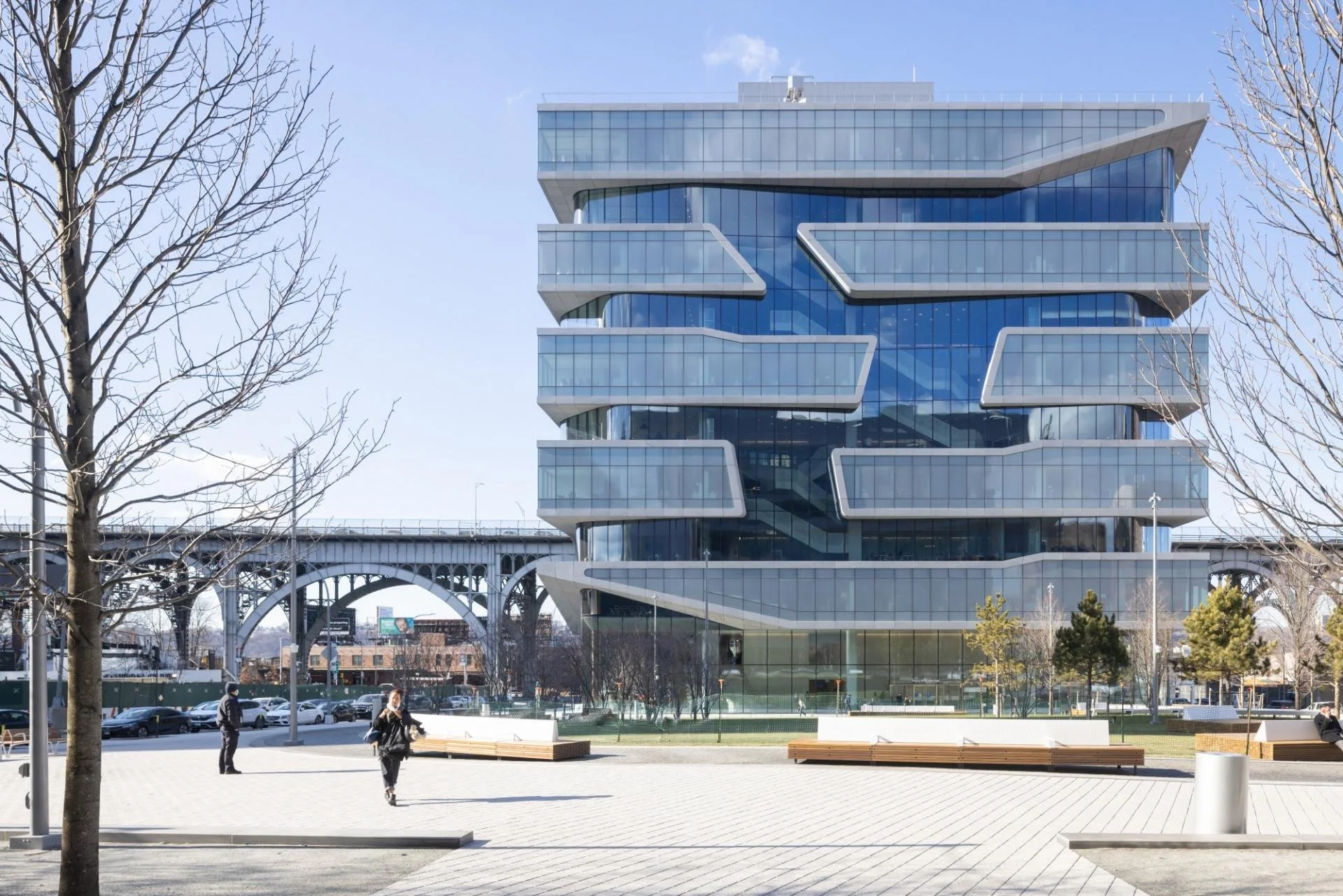
Columbia Business School
Columbia rewards the applicant who wants the business world woven into the two years rather than waiting at the end of them — someone who'd use what the city puts within reach.
What Columbia Business School Is Actually Trying to Build
The natural question is "what is Columbia looking for?" The more useful one sits a layer beneath it: what is Columbia trying to build, given where it sits? Because what they select for follows from that.
Columbia is one of the only top U.S. business schools located inside a global business capital rather than near one — the same structural fact that defines London Business School. The curriculum assumes the city is reachable mid-week. Practitioners teach courses and head back to their firms across town; the Distinguished Speaker Series brings in people like Citi CEO Jane Fraser and Accenture chair and CEO Julie Sweet for conversations students can simply walk into. So here's what the school selects for: people who will put that access to work rather than collect it as a credential — applicants with enough sense of direction to turn proximity into outcomes. The application says so almost directly, pressing on goals and on how you'd contribute to the community rather than on how impressive you are in the abstract.
That network is a real part of what you'd be buying. Columbia's alumni run a meaningful slice of global finance — Henry Kravis (MBA '69) co-founded KKR and effectively invented the leveraged buyout; James Gorman ran Morgan Stanley; Sallie Krawcheck and Vikram Pandit reached the top of Wall Street; Robert F. Smith built Vista Equity; and the value-investing lineage runs back through Warren Buffett to his Columbia teacher Benjamin Graham. The point isn't the names. It's that the people who built those careers stay close to the school — they teach, they speak, they recruit — which is the access the program is designed to convert.
Read against the larger frame, that's the whole game. Columbia isn't assembling a class that would look good in a vacuum. It's building a roughly 980-person community, sorted into clusters of about 65 and five-person learning teams, where each person is expected to add a specific kind of value to the others. Your application's real job is decision support: it gives the reader evidence of who you'd be inside one of those clusters, and what, concretely, you'd contribute. It's not about you in the way most applicants assume. It's about the cohort you'd be joining.

Who Genuinely Belongs Here
When the question is whether you belong at Columbia, applicants usually jump to "are my numbers good enough?" Instead, I encourage them to ask themselves whether Columbia is the right next chapter for where they’re headed, and whether the way they like to work matches a program that runs on proximity and pace.
Columbia rewards a certain kind of engaged momentum — a working sense of direction and a drive for a fast, dense, professionally porous environment. That doesn't mean having every answer; plenty of students refine their direction once they arrive, and the flexible curriculum is built to let them. But the more clearly you can picture what you'd do with the access Columbia gives you, the more the place works for you.
A useful self-test is to picture your weeks here and notice your reaction. If a city humming just outside the classroom reads as the point of going, that's a strong signal. If what you picture instead is a self-contained campus set slightly apart from the world — grass, a quad, a single cohort with few competing demands on your evenings — it's worth asking whether a more residential program fits you better. If you want grass and trees, this isn't your program. It’s more subway stop than Central Park picnics.
The Class Profile, Read Honestly
The most recent confirmed class — the Class of 2027, who entered in 2025 across both the August and January cohorts. Columbia reports the two entry terms as a single profile:
Columbia received about 7,477 applications across both entry terms. It doesn't publish a single admit rate, and the number moves with the cycle — recent years have run directionally in the high-teens to mid-20s percent.
Where They Worked Before
Bars show share of the entering class.
A few things that are easy to misread in these numbers:
The acceptance rate
Columbia's admit rate is published differently across sources and moves year to year, which is itself the tell: read it as directional, not precise. It's genuinely selective, and the more important point is what the rate doesn't capture. Columbia draws a large, self-selected, finance-and-consulting-heavy pool, much of it competing for the same handful of high-demand tracks. A headline percentage tells you little about your odds in your specific lane. The bar that matters is whether your file makes the fit credible against the others reading like yours — and in the most crowded lanes, that bar is higher than the school-wide number suggests.
The test scores
A 734 legacy GMAT average (690 on the Focus edition) is firmly M7-competitive, and the wide reported range — into the low 600s — tells you scores don't decide outcomes here on their own. A score below the average can be carried by a strong overall file, especially if your quant credibility is established elsewhere. Two practical notes: Columbia accepts the GRE on equal footing, and roughly half of recent applicants use it, so submit whichever is your stronger test. Columbia is also one of the few schools that accepts the Executive Assessment for its full-time MBA (Duke, Georgetown, and NYU Stern among the others) — a shorter test with far less prep, which can be a sensible workaround if testing isn't where you want to spend months or money. The caveat: some finance and consulting recruiters still screen on a score after you're admitted, so weigh the test choice against where you're headed, not just what's easiest to clear.
The international share
At 41%, Columbia is among the more international M7 classes. One note for international applicants: Columbia added a new short-answer question for you in the most recent cycle (confirm the exact prompt on the portal) — an opportunity to be concrete about why an MBA in the States, and in New York specifically, serves your trajectory.
The industry mix
Finance and consulting together make up more than half the pre-MBA backgrounds and dominate the post-MBA destinations. Applicants from outside that center get in every year, but they tend to be deliberate about connecting their goals to what Columbia's network actually delivers. If your path sits far from those lanes, Columbia can still be an excellent fit — you'll just want to be specific about the channels you'd use rather than assuming the brand carries you.
The profile isn't a benchmark you need to match line by line. It's a picture of who Columbia admitted last year. Your job is to give the reader evidence that places you in that picture clearly.
Common Myths About Columbia
"Columbia is only a finance school."
Finance is the largest destination and the deepest part of the school's identity — but the data has moved for years. In the most recent employment report, consulting drew about a third of the class, nearly matching financial services, and tech, media, real estate, and healthcare all take meaningful shares.Columbia is also widely regarded as a leading U.S. school for retail and luxury goods, with an influential presence in New York that includes the annual Retail and Luxury Goods Conference. The finance reputation is earned; the idea that it's the only door Columbia opens is a decade out of date.
"It's a commuter school with no community."
This is the criticism Columbia has worked hardest to retire, and the honest answer is layered. It's true that Columbia doesn't feel like a contained residential campus the way a small program does — there's no single quad that holds the whole community. What Columbia did instead was build community structurally: the cluster system keeps roughly 65 students together through the entire core, and the new Manhattanville campus finally gave that community a real home base. The community is genuine; it's just assembled rather than inherited. (More on the texture below.)
"You have to want investment banking to belong here."
No. Finance is the gravitational center, but the school sends large cohorts into MBB consulting, tech, and media, and runs deep programs in entrepreneurship, value investing, real estate, social enterprise, and luxury retail. Wanting finance helps you use one of Columbia's strongest channels. It isn't a membership requirement.
"Columbia is cutthroat because it's big and finance-heavy."
The size and the finance concentration lead people to expect a grind, and current students consistently push back on it. The cluster and learning-team structure makes collaboration the default — your group's work depends on the same four people for the hardest stretch of the program. It's an ambitious, fast environment. "Cutthroat" is the wrong read.
"The January and August programs differ in quality."
They don't. J-Term students take the same core, electives, faculty, clusters, and network — they simply compress the degree into about 16 months and skip the summer internship. The difference is fit and timing, not tier. More on who each serves below.
Identity and Program Basics
Columbia Business School, part of Columbia University, in New York City. A two-year, full-time MBA with two entry points — the traditional August start and the accelerated January start (J-Term) — founded in 1916. Since 2022 the school has occupied a purpose-built home uptown on the University's Manhattanville campus in West Harlem: the Henry R. Kravis Building and the Ronald O. Perelman Center for Business Innovation, with David Geffen Hall nearby. The names aren't incidental — Kravis (MBA '69) co-founded KKR, Perelman built MacAndrews & Forbes, and Geffen is the entertainment mogul behind Geffen Records and DreamWorks. Three nine-figure gifts from people who made their fortunes in the businesses Columbia teaches, which says something about how seriously the school's network takes it. The buildings, by Diller Scofidio + Renfro, are genuinely state-of-the-art: light-filled and modern, built for how business is taught now. The MBA enrolls roughly 980 students across both terms. The dean, Costis Maglaras, is a data-analytics and quantitative-finance scholar — which matters more than a leadership footnote usually would; see the curriculum and faculty sections.
The Curriculum, and What It Reveals
Columbia's curriculum has three defining features: a structured first-year core taken inside your cluster, an unusual degree of flexibility after that, and a deep bench of city-powered experiential offerings. (The MBA was named Poets & Quants' 2025 MBA Program of the Year.)
The core covers the standard foundations — corporate finance, financial accounting, managerial economics, statistics and business analytics, leadership, operations, marketing, strategy. What's distinctive is how you take it: entirely within your cluster of about 65 students, with a five-person learning team carrying you through group work, and the cluster stays intact for both years. It's the structural answer to the old community critique, and it works as designed — a dense home base inside a large program.
The flexibility is the part applicants underuse. Students who can demonstrate proficiency can exempt out of core courses and replace them with electives, and most begin electives as early as the second semester. The catalog is broad — entrepreneurship, value investing, real estate, media, sustainability, family business, retail and luxury goods. The signature experiential offerings lean on the location: Master Classes put student teams on live consulting problems for real New York companies; the Value Investing Program carries the Graham-and-Dodd legacy that originated here; Chazen study tours run faculty-led international immersions; the Columbia Startup Lab gives recent alumni a downtown home for ventures. The same city access drives student life — marquee student-run conferences, like the long-running Private Equity Conference, draw hundreds of industry leaders to campus each year.
What the curriculum reveals: Columbia hands you the keys rather than dictating the route. That suits the applicant with enough direction to build a deliberate path and can feel under-structured for someone still searching for one. Note the trajectory, too — under Dean Maglaras, the school has pushed analytics, data, and AI deeper into the curriculum. The center is still finance, but increasingly finance fluent in data. If you read that as where business is heading, Columbia is positioning itself there on purpose.
Culture and Community, Beyond the Marketing
Columbia's culture is where its reputation lags its reality. The word the school uses is "collaborative," and the honest version is that Columbia engineered collaboration into the structure rather than hoping the class develops it. The cluster keeps the same 65 or so people together through the most formative stretch of the program; the learning team puts you on a small unit with four people from industries unlike yours, where the assignment genuinely depends on what each person brings.
Here's the texture applicants tend to misjudge in both directions. The under-read: assuming a 980-person school in a giant city must be anonymous and transactional. It isn't — the cluster makes that impossible, and you'll know your section deeply. The over-read: expecting the all-consuming, single-cohort intensity of a small residential program, where there's nothing to do but be together. Columbia isn't that. The community here is real, but it competes with the city, and you build it on purpose — through your cluster, your clubs, and the people you keep close. That's a genuine difference in texture from a school where the campus does the work for you, and it's worth knowing which you're signing up for. Day to day, the feel is more peer-supportive than the size and finance reputation would lead you to expect.
The “I got in” Instagram photo: the glass face of the Kravis Building on the Manhattanville campus, with the city behind it — or, for the classic version, the steps below Low Library’s dome, the Columbia everyone pictures. Either tells your feed exactly where you landed.
Life at Columbia
Let's talk about what it's actually like to live here for two years, because "New York City" in The Devil Wears Prada and New York City on a second-year budget are not quite the same animal. New York is energizing, expensive, and relentless — not necessarily in that order.
Start with the geography, honestly, because applicants who've never visited tend to picture the school in midtown. It isn't. Columbia sits uptown in Morningside Heights and Manhattanville, on the Upper West Side's northern edge. Midtown is roughly 30 to 35 minutes by subway; Wall Street is more like 35 to 45. That's close by the standards of a global city and farther than "in the heart of New York City" implies — nearer to a Kellogg-to-downtown-Chicago commute than to NYU's near-doorstep proximity to the financial district. The access is real. It's access you ride the 1 train to.
The campus rewards the contrast. Morningside Heights is the Columbia most people picture — neoclassical and Beaux-Arts, anchored by the Pantheon-inspired dome of Low Library at the top of its broad steps, near 116th Street between Broadway and Amsterdam. The business school's actual home is a twenty-minute walk north on the newer Manhattanville campus: glass, light, and modern, a deliberate break from the old stone. Step outside either and you're in the real city — Riverside Park and the Hudson as the campus's backyard, Harlem's food and music history a few blocks north.
And the city hands you the rest. The food alone rewards the curious: New York's bagel debate is real enough that the New York Times has ranked the shops, and the city covers you whether you want a dollar slice on the walk home or Ethiopian food at 3 a.m. Culture is genuinely at your fingertips — the Met a short ride down Fifth Avenue, Broadway on same-day discount tickets if you'll wait in the TKTS line, Madison Square Garden for the games and the concerts. There's the celebrity-sighting electricity, too; on one campus visit, I once turned a corner and nearly walked into Billie Jean King. And when you need time away, a quiet beach (the Hamptons) and green mountains (Vermont) are both within a weekend's reach.
A word on cost and city-smarts, since both are part of the honest picture. New York is expensive — rent bites first — and the applicants who struggle here usually aren't the ones who dislike the city but the ones who didn't budget for it. It's also a big city: you'll commute by subway, sometimes after dark, and ordinary urban awareness applies. The campus neighborhoods are well-trafficked and student-dense, but this is city living, not a gated campus. Or if the idea of buying shaving cream locked behind plexiglass at the corner drugstore is a dealbreaker, New York may not be your speed; if the realities of urban density strike you as an abundance of choice, it’s hard to beat.
The "I got in" Instagram photo: the glass face of the Kravis Building on the Manhattanville campus, with the city behind it — or, for the classic version, the steps below Low Library's dome, the Columbia everyone pictures. Either tells your feed exactly where you landed.
The thing to understand is that the city is the variable that makes or breaks the experience. In a self-contained program, the campus builds your two years. Here, you do — and the city repays that effort at a scale nowhere else can match.
Research, Faculty, and Intellectual Identity
Columbia's intellectual identity is anchored in finance and economics, with deep strength in value investing, real estate, and increasingly data, analytics, and AI. The value-investing tradition is its oldest signature: it runs from Benjamin Graham and David Dodd through Bruce Greenwald, whose teaching made Columbia the modern home of the discipline. The economics bench includes figures like dean emeritus and prominent economist Glenn Hubbard and Nobel laureate Joseph Stiglitz, a University Professor at Columbia. And the school's newer center of gravity in data, AI, and private-equity research — the Dean's own field — is where much of the recent hiring has gone.
For an applicant, this is less about marquee names than about access and currency. What MBA applicants actually want from faculty isn't a professor to study under but people who are reachable, teach well, and are plugged into the live version of their field. Columbia's edge is the city: the people teaching finance, real estate, or media often practice it across town, and the line between classroom and market is unusually thin.
What Columbia’s Essays Are Actually Testing
Columbia's application is built around short answers plus three required MBA essays. (These reflect the most recent published cycle; confirm current prompts on the CBS site before drafting.) Together they test whether your goals are specific and credible, and whether you understand the community well enough to contribute to it.
Short answer — immediate post-MBA goal (50 characters)
A one-line target: job title plus industry or firm type, no throat-clearing. It has to align with everything that follows.
Short answer — your first summer, August entry (50 characters)
How you'd spend the summer between years — internship target or venture focus. Specificity is the whole test.
Essay 1 — career goals (500 words)
"Through your resume and recommendation, we have a clear sense of your professional path to date. What are your career goals over the next three to five years and what is your long-term dream job?"
Notice what the prompt does: it tells you the résumé already covers the past, so don't re-narrate it. This is forward-looking. Columbia wants a near-term goal specific and reachable enough that the program can clearly help you get there, plus a longer-range "dream" that shows ambition. Where it goes flat is 300 words of backstory and 200 of generic target. The stronger move: brief context, a concrete near-term goal, a vivid long-term one, and just enough about why Columbia's specific resources serve the path.
Essay 2 — collaboration and community (250 words)
"Please share a specific example of how you made a team more collaborative, more inclusive, or fostered a greater sense of community within an organization."
The school is asking, plainly, for evidence that you make groups better — exactly what the cluster model runs on. The version that falls flat is abstract ("I value collaboration"). And it doesn't have to be a work example — a volunteer organization, a college team, a sports league all work. Pick the one situation where your fingerprints are clearest, wherever it comes from.
Essay 3 — co-creating your CBS experience (250 words)
"We believe Columbia Business School is a special place with a collaborative learning environment in which students feel a sense of belonging, agency, and partnership — academically, culturally, and professionally. How would you co-create your optimal MBA experience at CBS? Please be specific."
This is the prompt that trips people up, because it can feel long and abstract — so break it into parts and answer each. What does it literally ask? Describe the experience you'd build. What does "co-create" mean? It means you're not arriving as a passive student to consume what's on offer; you're expected to help make the place stronger, and the magic happens when students from different backgrounds bring their talents to one another. So the real question underneath is: what, specifically, will you bring? This essay rewards real knowledge of the place — actual courses, Master Classes, clubs, the Value Investing Program — tied to what you'd contribute, not only what you'd take. Done well, it's the clearest demonstration of the "enrich the cohort" idea in the whole application.
One caution that applies here and in the interview: everybody name-drops Columbia alumni — it's the school people most love to do it with — which means it doesn't differentiate you. What lands is substance: not "I admire alum X," but what you took from a conversation, an event, a specific takeaway that shaped your thinking. Show the engagement, not the name.
A related, more common misstep — especially among international applicants, or those from families involved in business or entrepreneurship — is underplaying the context of your own background. Strong applications don't flatten that context; they make it legible. That can mean being specific about the environments you've operated in, the kinds of organizations or industries you've been close to, or the vantage point that shaped how you see things. The point isn't status-signaling; it's clarity — helping the reader understand what's distinctive about your perspective and what you'd bring into a classroom discussion. At Columbia in particular, where the city is part of the learning environment, that kind of context can meaningfully strengthen an application.
Optional essay (up to 500 words)
For context on anything a reader might otherwise wonder about — a dip in your record, a gap, an anomaly; bullet points are fine. When there's a real reason for something, give it, because a reader who doesn't know why tends to fill the silence with a worse assumption than the truth. When nothing genuinely needs explaining, leaving it blank is the stronger choice.
A note for two groups:
January (J-Term) applicants answer a short question on why they prefer the January start — treat it as a genuine fit question (see below). Reapplicants generally write one reapplicant essay in place of the three.
Recommendations
Columbia requires only one MBA recommendation from first-time applicants — unusual at this tier, where most peers ask for two. The implication is worth sitting with: a single letter carries all the weight normally split across two. Choose the recommender who can speak in specifics — concrete examples of how you work, lead, and make a team better — over the most senior name who'd offer warm generalities. Columbia's questions ask directly how you compare to peers and about constructive feedback you've received, so brief your recommender to come with real situations, not adjectives. (Reapplicants submit one new recommendation.)
The Interview, and What It Actually Evaluates
Columbia MBA interviews are by invitation only, and the format is distinctive: they're conducted largely by alumni, who have seen only your résumé, not your application. That design is deliberate. Alumni are the guardians of the brand — the value of their own degree rises or falls with who the school lets in — so they're reading for something specific: will this person make Columbia stronger or weaker? Underneath the professional questions runs a more human one, the kind anyone sizing up a future colleague asks: would I want this person in the room, on my team, vouching alongside me? It's a conversational, résumé-driven interview, not a stress test: walk me through your path, why an MBA, why now, why Columbia, where you're headed.
What it's actually evaluating is coherence and fit. Does the person in the room match the file? Are your goals credible when you talk about them unscripted? Applicants who absorbed Columbia from a rankings page but never engaged with how the program works tend to feel thin here. Know the place well enough to talk about it like someone who's chosen it.
Application Logistics
Tests: GMAT, GRE, or the Executive Assessment accepted (the EA is unusual for a full-time program; Columbia takes it). No minimum score.
Recommendations: One (first-time applicants).
Résumé: One page preferred; up to two acceptable.
Application fee: $250 (confirm current fee and any waiver routes on the CBS site).
Transcripts: Scanned copies at application; official copies upon admission.
Generative AI: Columbia permits AI tools for idea generation and editing but prohibits using them to generate complete responses, and treats it as an Honor Code matter.
Deadlines and Round Strategy
Columbia runs two entry terms on separate timelines. The dates below reflect the 2026–2027 cycle (August entry = Class of 2029; J-Term = January 2027 entry). Always confirm current-cycle dates on the CBS site before planning.
August entry (three rounds):
Round 1: September 9, 2026 — interview decisions ~November 2, 2026 — final decision ~December 14, 2026
Round 2: January 5, 2027 — interview decisions ~February 17, 2027 — final decision ~March 24, 2027
Round 3: March 29, 2027 — interview decisions ~April 30, 2027 — final decision ~May 12, 2027
January 2027 (J-Term) entry (reviewed on a rolling basis within rounds):
Round 1: June 17, 2026 at 12:00 PM ET — final decisions no later than July 31, 2026
Round 2: August 13, 2026 at 12:00 PM ET — final decisions no later than October 1, 2026
On round strategy
If Columbia is genuinely your first choice, Round 1 is the strongest play — it carries the most open seats and the most scholarship money, and the school treats an early, committed application as exactly that. (Columbia no longer runs a binding Early Decision option; the equivalent today is simply applying Round 1.) Fellowship and merit aid favor earlier rounds, and — importantly — J-Term applicants are generally not eligible for merit fellowships because of where the January timeline falls. So if scholarship matters and you're committed, August Round 1 is the call. Round 2 is still very competitive and the largest round at most schools. Round 3 is a real option when your timing requires it, though seats and money are tighter by then. The honest rule underneath: a strong Round 2 application beats a rushed Round 1 one.
J-Term or August? Choosing Your Entry Point
A genuinely Columbia-specific decision that applicants weigh constantly.
The August entry is the traditional two-year MBA with a summer internship — the right path if you're changing industry or function, because the internship is how most career switchers test and land the pivot.
The January entry (J-Term) compresses the degree into about 16 months by skipping the summer internship. It's built for applicants who don't need the internship to reach their goal — people returning to the same industry or company, sponsored candidates, family-business successors, entrepreneurs. You get the same core, faculty, electives, clusters, and network; you just move faster. Two tradeoffs: you forgo the internship as a pivot mechanism, and you're generally not eligible for merit fellowships.
The decision comes down to one question: do you need a summer internship to get where you're going? If yes, August. If no, J-Term saves time and opportunity cost without diluting the degree. If you're unsure, August is the safer default — it preserves the internship option you can't add back later.
Employment Outcomes, Read for What They Signal
For the most recent reported class (Class of 2025, roughly 900 graduates): within three months of graduation, about 92% had received offers and 90% had accepted. Median base salary was $175,000, with a median signing bonus of $30,000. Financial services led at about 35% of the class — investment banking near 17%, investment management around 7%, private equity about 5%, venture capital 2–3%. Consulting drew about 33%, at a median base of $190,000. Technology took around 10%, with real estate, consumer goods, healthcare, and media making up much of the rest. Graduates joined some 346 organizations, more than 200 hiring CBS for the first time that year — a quiet signal of how wide the recruiting net runs.
One number worth reading closely: consulting's median base ($190,000) sat above the overall median ($175,000). Not because consulting outpays finance across the board, but because consulting pay is highly standardized at the top firms, clustering at a high number, while finance spans a wide range — from very high private-equity and banking packages down to lower-paying investment-management and corporate roles. The blended finance figure gets pulled down by that spread. In plain terms: the typical Columbia consulting hire lands at a predictable top-tier wage, while finance outcomes are higher-variance — bigger ceilings, wider floors.
What this signals
If your goals sit in finance, consulting, or established roles in tech, media, or real estate, Columbia's outcomes are strong and the network is built for you. If your goals are in West Coast tech or the founder track, Columbia can support you — but you'd be working with channels built primarily for other destinations, and a school closer to that gravity deserves a look alongside it.
Cost and Financial Aid
Annual tuition (2026–2027): $93,908
Estimated total first-year cost of attendance: $143,030 (tuition plus fees, health insurance, books, and NYC living expenses)
Aid approach: Primarily need-based. About half of students who apply for need-based scholarships receive an award, averaging approximately $20,000.
J-Term note: January-entry students are generally not eligible for merit fellowships
The strategic point is that Columbia leans need-based, and the total cost — driven up by New York — is among the highest in the field. For applicants whose finances don't qualify them for substantial need-based aid, it's worth comparing Columbia's likely net cost against merit-driven programs that award strong candidates regardless of need. The right financial answer is personal, and it belongs in the decision alongside fit and outcomes.
Rankings, in Context
Columbia lands roughly #7 (tied) in the most recent U.S. News, #2 globally in the most recent Financial Times, around #9 in Bloomberg Businessweek, and near the top ten in QS and Poets & Quants — with the usual year-to-year movement.
The spread between U.S. News (#7) and the FT (#2) is the most useful thing here, and worth reading rather than averaging away. The FT weights post-MBA salary, salary growth, international mobility, and finance outcomes heavily — exactly where Columbia's profile is strongest. U.S. News leans more on domestic selectivity and employment rates. So Columbia ranking far higher on the FT isn't noise; it's a fingerprint of what the school is good at. Use rankings to understand a school's shape, not to settle a decision a table was never built to settle.
How Columbia Differs From Wharton
The most-searched Columbia comparison, usually answered with surface stats. Both are M7 powerhouses with finance at the core and strong consulting placement. The differences that matter are texture and fit, not prestige.
Location and how it's used
The real divide. Columbia is in New York, with the market woven into the program's weekly rhythm; Wharton is in Philadelphia with a New York presence, but the everyday center of gravity is a campus. If you want the city embedded in the education, that's Columbia's signature. If you'd rather a strong contained campus with the city accessible when you want it, Wharton leans that way.
Size and quant reputation
Wharton's class is large and its analytical, STEM-heavy brand is a defining feature — quantitative depth at scale. Columbia is also large but routes community through the cluster system, and its quant identity, strengthening under a data-focused dean, reads more as finance-fluent-in-data than as Wharton's broad quant brand. Many applicants want elements of both, worth sitting with rather than resolving too fast.
The cross-admit decision
Applicants usually decide on city-versus-campus and the kind of community they want, rather than on outcomes, which are comparably strong. Neither is wrong; they optimize for different things.
A New York note — and NYU Stern
If the deciding factor is "I want to be in the financial capital of the U.S.," the honest peer comparison isn't only Wharton; it's NYU Stern, also in Manhattan — and worth knowing that Stern sits downtown in Greenwich Village, much closer to Wall Street than uptown Columbia. Stern is smaller and more intimate; Columbia carries the larger network and the Ivy brand. Worth a look if the city itself is the draw.
Signals You Might Be a Strong Fit
MBA School Fit is hard to feel from the outside, so here are concrete, checkable signals. If two or three sound like you, you're probably reading Columbia correctly.
You'd put the city to work. The access reads as the point of going, not a perk you'd rarely use.
You can fill in the 50-character goal without flinching. You have a near-term target — a role, an industry, a firm type — and can defend the path to it. That clarity is what Columbia's structure rewards most.
You're comfortable building your own community. A cluster of about 65 and a five-person learning team inside a big, ambitious class sounds like the right amount of structure — and you don't mind being a little more anonymous than you'd be at a small program like Tuck.
Abundance energizes you rather than derails you. New York offers more than anyone can do, and the class spans a wide range of backgrounds and lifestyles — including more affluent ones than you may be used to. Whether you're a foodie, a museum-goer, or a theatre fan, what matters is that the mix is fuel: you take what's yours and tune out the rest, rather than feeling pulled in every direction or like you're missing out.
You can name what you'd contribute. Not "I'm a hard worker," but a specific perspective or capability you'd bring to a learning team where everyone's expected to add something.
Signals You Might Not Be the Best Match
The honest counterpart. None of this means you wouldn't be a strong applicant somewhere, or that you shouldn't apply — that's your decision. It means the specific match is worth examining before you commit a cycle to it.
It may not be the best match if you want a self-contained campus world — grass, a quad, a single cohort in one place. Programs built around a contained campus deliver that in a way a city-based MBA structurally can't, and they're worth a look alongside Columbia.
It's a harder fit if cost is a serious constraint and aid is central to your decision, given the need-based lean and New York prices. There's a softer version of this worth an honest gut-check, too: at Columbia, as at HBS and a few peers, you'll find a slice of the class that travels comfortably — ski trips, weekends abroad, a lifestyle not everyone shares. Most students aren't living that way, and no school is free of it, but it's a touch more visible here. Would that be motivating background noise, or a steady source of FOMO? If you'd rather a student body that reads as more uniformly down-to-earth, that's fair to weigh.
And it's worth questioning whether the fit is right if your goals point squarely at West Coast tech or the founder track. Columbia can support those paths, but you'd be working against the recruiting gravity rather than with it.
If two or three of these land, treat it as a prompt rather than a verdict — fit is a weighted sum, not a single deal-breaker. The most useful next step is to ask whether the schools that fit you better are programs you're genuinely as excited about, and to do that fit work honestly now, while it can still shape where you apply.
When Working With Someone Helps, and When It Doesn't
Columbia's application has features that genuinely benefit from an outside reader. Take the goals essay: it's hard to judge your own goal from the inside, and most early drafts I see spend too many words on how the applicant got here and too few on a concrete, credible target — an imbalance a second reader catches fast. The co-creation essay is another place a second reader earns their keep: it's easy to write a version that could belong to any school, and harder to write one that shows you'd build something specific here. And the single-recommendation structure raises the stakes on recommender choice in a way applicants often underestimate.
That said — no consultant can manufacture clarity about your direction. If you don't yet know what you'd do with Columbia's access, the work before the essays is figuring that out. The essays then become a record of that thinking, not a substitute for it.
If you'd like to talk through whether your application is at the stage where outside input would help, a free consultation is a low-pressure way to find out. We'll talk about where you are, what Columbia is likely to weigh in your case, and what matters most before you draft.